Showing posts with label comedy. Show all posts

Saturday, March 14, 2026

Book Review & Analysis: The Freddie Prinze Story by Maria Pruetzel & John A. Barbour


The Freddie Prinze Story

by Maria Pruetzel & John A. Barbour

      The 1970s were a golden era for television sitcoms. People got nightly doses of half hour comedies about working class people or upwardly mobile minority groups that worked hard to raise themselves above the status they were given. These shows were socially conscious, using humor and sympathetic characters to show that, despite our differences, people from all walks of life can solve problems and learn to live together. Norman Lear was a major driver of this pop culture trend, bringing us shows like Sanford and Son, The jeffersons, Good times, and the now monumental All In the Family. Other shows like Barney Miller and Welcome Back Kotter worked along a similar line but emphasized workplaces that were more ethnically integrated as opposed to Norman Lear’s productions that focused more on white and African-American familial relations. Looking back now, it is obvious that although Latino communities were present in those shows, they were also underrepresented. So in the mid-1970s, producer James Kornack saw the gap in the market and created Chico and the Man, the first TV show in history to be set in a Mexican-American neighborhood. It was the story of a cranky, elderly white garage owner who hires a young Chicano to work as an auto mechanic. The show was a hit so when the star, Freddie Prinze, took his own life, a dark cloud came over the lives of television viewers across America.

Immediately after the shocking suicide, the networks were quick to cash in on the tragedy and aired a made for TV movie about the actor and comedian’s life. But the family were unhappy with the production which they thought was sensational, inaccurate, and commercially motivated. Therefore Prinze’s mother Maria Pruetzel in collaboration with John A. Barbour, to put together The Freddie Prinze Story giving her version of what happened.

As this biography opens, Freddie Prinze is lying on his deathbed in the ICU of a Beverly Hills hospital. His parents are there along with his closet friends and colleagues along with medical professionals who try to save his life while holding a rabid gang of journalists at bay. With a gunshot wound to his head, the chances of survival aren’t great. It’s a maudlin scene with heightened emotions and lots and lots of praying and talk about God. As a non-religious scholar of the literary arts, this was off-putting to me at first, but saw the necessity of suspending my previously formed prejudices and admitting to myself that this is how some people are in real life. One thing I can say in this book’s favor is that its realism cut through all my preconceptions and brought me out of the boxes I think inside to a grounded place that reminded me of the varieties of ways people deal with grief in this terrible world we live in. After clearing away the fog of my intellectualism (some might call it pseudointellectualism but I’m not the one who gets to decide if that’s correct or not), I was ready t move on.

In contrast to the deathbed scene, the shift to the story of Freddie Prinze’s childhood came in like a ray of sunshine. He was born as Freddie Pruetzel to immigrant parents, his mother coming from Puerto Rico and his father coming from Hungary as a refugee from the communist government. While his mother was proud and compassionate, constantly gushing with love and admiration for her son, his father was quiet and distant. Freddie maintained a close relationship with them throughout his brief life. The family raised him in the Washington Heights neighborhood of Upper Manhattan, straddling the line between the working class and the middle class. They weren’t rich, but Freddie was a little bit spoiled as his hard working parents went out of their way to give him whatever he wanted.

In his teenage years, Freddie Pruetzel got accepted into a performing arts high school, the same one that later became the basis for the TV show Fame. He was popular, charismatic, and smooth with the ladies and also a bit precocious. He flunked out of school because he was spending all his nights on stage doing routines as a stand up comic, something he had a natural talent for. Some of these venues he worked, like Catch a Rising Star and the Improv are now legendary for being the place where many famous comics were discovered. Freddie Pruetzel was discovered by David Brenner who immediately saw his talent. Brenner took him on as a friend and mentor, helping guide him towards the show business big time before he got out of his teenage years.

Freddie Pruetzel moved to Hollywood, changed his name to Freddie Prinze, and continued working on the national stand up comedy circuit. After his move, he made one of the biggest errors of his career: he ditched his agent in New York and took on a local agent who had more contacts in the West Coast entertainment industry. This contract break would come back to bite Prinze financially later on.

But things were on the up and up for Prinze. He got cast as Chico in the TV show Chico and the Man and television brought him into the homes of people all across America. The show was not without controversy though. A lot of Mexican-Americans objected to him playing a Chicano mechanic because of his Puerto Rican and Hungarian ethnic background. This might seem trivial to some, but from a Chicano point of view there were few Mexican people in Hollywood story lines and fewer chances for Mexican people to enter the mainstream entertainment industry. Historically Mexican people were often played by white people wearing make up to make their skin look brown. So the conflict, like so many other conflicts in the world, was over access to a limited resource. If you come from an underrepresented community, this can make a difference. But otherwise the show was a hit and Prinze’s stand up performances consistently drew huge crowds too.

Flush with money, Prinze bought a house for his parents in Los Angeles and that was probably the best thing he did with his newfound fame and wealth. Otherwise, he got hooked in a cycle of drug addiction where he sniffed cocaine to feel energetic then took valium and quaaludes to calm himself down. With alcohol and weed added into the mix, his brain became foggy and it wasn’t long before he felt lost in the world. Prinze made the mistake of thinking that getting married and starting a family would bring him out of his depression, but it didn’t. Then the parasitical agent in New York ,who he dropped the contract with, sued and won, thereafter being entitled to a significant chunk of Prinze’s earnings. The comedian wandered around in a suicidal daze until one night, in the presence of his business manager, he shot himself in the head.

Freddie Prinze’s suicide flies in the face of everything we are told about how to help people who want to end their lives. They tell us that religion and communal bonds are what prevent people from offing themselves, and yet Freddie Prinze was deeply religious to the point where he had considered leaving show business to become an Evangelical minister. And up until the hour of his demise he was surrounded by friends and family who were literally begging him not to kill himself. Something was wrong with him on a much deeper level than community and faith. His mother the narrator makes it look like his drug abuse was the ultimate problem. The drugs certainly didn’t help, but simply blaming the drugs doesn’t answer the question of why this happened because this kind of drug abuse is often a symptom and not the causal illness of depression. As an armchair psychologist, my opinion is that Freddie Prinze got into too much too soon. He got swept up into a life of fame at a young age and then found himself lost and disoriented without any maps or reference points to guide him along the way. He was 21 when he committed suicide; he was still a child. I feel like he was too young and immature to handle all the pressures of fame and wealth that were put on him before he had developed a strong inner core of self. He hadn’t developed enough sense of identity or psychological stability to be able to handle the burdens of a whirlwind career where he had the world at his fingertips and had no idea what to do with such responsibility. He was just a kid when he died and the close relationship with his mother, and his emotional dependence on her, shows that he hadn’t matured to the point necessary to continue on with the life he had gotten himself into.

For the kind of book this is, it’s surprisingly well written. It does leave out a few details though. This was written by Prinze’s mother in collaboration with an actual writer so it’s taken for granted that she will be selective in what she does and doesn’t include. And regardless of how close a mother is to her son, there will always be things he did that she will never know about. But as it is the story feels complete. There should have been more commentary on Chico and the Man and hat it represented in American culture. If anybody reads this book in the future without having seen the show, its significance might be lost on them.

It’s also written from a unique angle. Biographies written by the subject’s mother are rare and those written by Puerto Rican mothers are even more rare. As can be expected, Maria Pruetzel gushes with motherly love for her son no matter how bad life gets for him. The writing is often sentimental and dramatic so it might be considered over the top by conventional literary standards, but as I said before many mothers are like this in the everyday world and the sentimentality makes this book hit home as a quality work of realism. And I don’t want to indulge in stereotypes of Puerto Rican people, but the way that Maria Pruetzel idolizes and dotes on her boy is common among the Puerto Rican mothers I’ve encountered in my time. There is a certain kind of bond between mother and son here that borders on religious devotion which makes the death of Freddie Prinze at the end so much more painful. This is as much a portrait of the central role a son plays in his mother’s life as it is a portrait of a tragic celebrity suicide. It must have been extremely painful for her to tell this story.

There is a list a mile long of comedians who were miserable and suicidal. Comedians entertain people by making jokes about the things that bother them and audiences are entertained by laughing at the jokes about things that bother the comedian. At some point this feedback cycle makes a lot of them snap. The Freddie Prinze Story is an account of one of them and it’s one more story in a long line of stories that are a lot like it. Even though memories of Freddie Prinze and Chico and the Man may be fading, this book is still timeless enough in theme to be worth reading in our present day. It might be of especial interest to people who are fascinated with the dark and tragic side of Hollywood.

The death of Freddie Prinze didn’t have to happen. But it did. That’s how the world is. So it goes.



Saturday, August 17, 2024

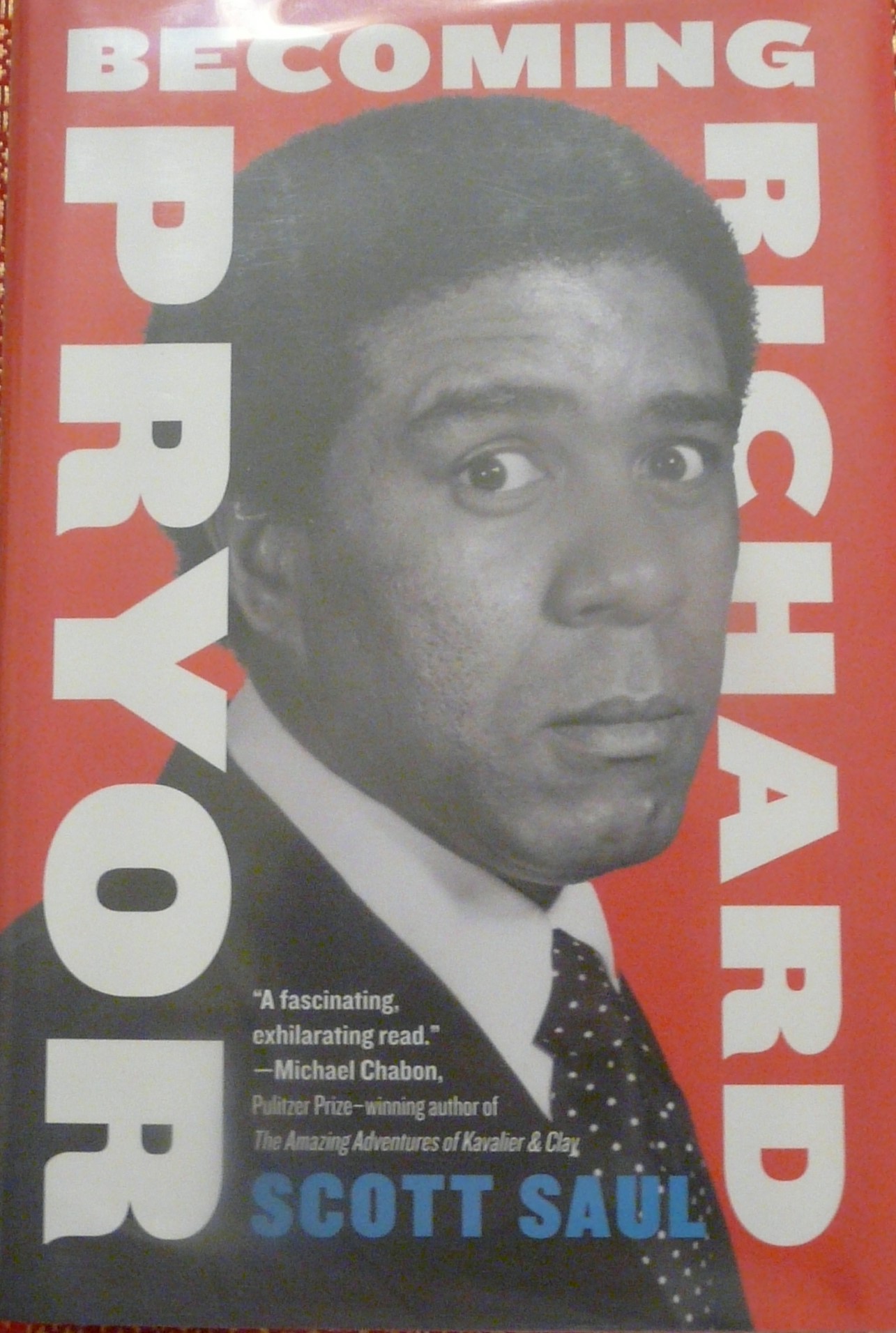
Book Review & Analysis: Becoming Richard Pryor by Scott Saul


Becoming Richard Pryor

by Scott Saul

      “Cocaine’s not addicting. My friends have been snortin’ coke for fifteen years and they’re not addicted.”

Welcome to the world of Richard Pryor. It’s a world where a young African-American boy grew up in an inner city brothel, discovered he had a talent for stage performance, and went on to become one of the greatest stand up comics of all time and a movie star too. If you grew up in the 1980s, your introduction to Richard Pryor was probably in family friendly movies like The Toy or Superman III. But those who explored his works further were probably shocked at first by the X-rated brand of humor on his comedy albums in which “bitch”, “motherfucker”, and the n-word are used over and over again. On stage, on screen, and in his personal life he was a complex man with a multi-faceted personality. In Scott Saul’s biography Becoming Richard Pryor, all these different sides are brought out on display. It’s like exploring the closet of a disguise artist to find an almost incomprehensible range of clothing styles that don’t go together but still make up a picture of the man who owned them. Only Pryor wasn’t just changing outfits to suit each individual character he played the way a normal actor would; these weren’t disguises since they came from inside the man, revealing to public view the crazy world that existed inside his head.

There are a lot of ways Scott Saul could have written this biography. He could have simply emphasized the course of Pryor’s professional career. He also could have emphasized the turbulent social and private life of the man. But instead he brought those two threads into a multi-dimensional biographical portrait showing how they contributed to the development of Richard Pryor’s work as an artist. Knowing that Pyror saw himself foremost as an artist rather than a comedian and actor helps clarify what a loftof his life was all about.

Richard Pryor’s childhood was something that no child should ever have to live through. He was raised in Peoria, Illinois by his grandmother, a strict disciplinarian and madame of a brothel who always carried a pistol on her person. His father was also a pimp and a violent man. Pryor spent his childhood seeing women being mistreated in various ways. He also went to integrated schools where he experienced racism first hand while also learning how to navigate in the white world as a Black person. He was smart but not a great student, getting attention by being a class clown. Then a perceptive woman working as a stage director in a youth center saw his potential and inspired him to pursue a career in the performing arts.

Eventually Pryor moved to Greenwich Village in New York City and easily found his way into the bohemian night clubs where he did stand up and got involved with improvisational acting troops. These actors were of the experimental and avant-garde variety and Pryor carried a surreal sense of absurdity into later works as a comedian and film maker.

It didn’t take long for him to get a break so he ended up in Hollywood starring in corny TV variety shows. Although he had made it into show business, he felt lost as though he wasn’t being himself, a situation that led to a nervous breakdown on stage during a performance in Las Vegas. After recovering from that crisis, his stand up comedy took a new, uninhibited turn and Pryor began drawing on his own life experiences to create a unique brand of performance that nobody had ever seen before. He began telling stories, switching his voice and demeanor to represent different characters in absurd situations. A lot of these characters were drawn from people in the African-American community. There were pimps, winos, junkies, con artist preachers, revolutionaries, and do gooders, all ciphers of recognizable character types. What Richard Pryor got right was that he mirrored these personages to the Black community, showing them the faults and shortcomings of people they recognized, but doing so in a way that humanized them. This wasn’t cruel humor. It was self-effacing humor, something rare in American comedy, that allowed Black people a chance to laugh about the things that troubled them. Richard Pryor also found success as a cross over comedian, appealing to progressive white audiences because he gave them a window into a Black community that they never experienced first hand despite their support for integration and the politics of Civil Rights.

The issue of racial politics play a prominent role in this book. Richard Pryor was deeply committed to the African-American cause and a fair bit of his performances were related to issues of racism and social justice. Even when making jokes about winos or tall tale bullshitters like his recurring Mudbone character, there was always a sense that these people were welcome as members of the Black community despite their human imperfections. Even when making jokes about white people he did so in a way that showed white people how they look in Black people’s eyes. This was done in a way that made white people laugh at themselves. Pryor’s relations with the white community were sometimes contentious though. As a child he had white friends at school and often encountered white men in the whorehouses where he lived, something that probably helped him get along with white people later in life, but later in his film career he got into long running disputes with directors and actors who didn’t always see things from his point of view. There were other times when he felt like he couldn’t trust white people even though acceptance in the white community was often a priority of his. And yet making it to the big time meant making it in the white world of entertainment. He had this conflict over being true to his art and his people or selling out, but somehow he came out on top, finding himself in script writing, producing, and acting that he would never have gotten into had he not pushed himself beyond the obstacles that other Black artists saw in their way.

There was one area in which his relations with white people was the most controversial: his relationships with white women. Maybe the seeds for his problems were planted in his childhood when he tried to be friends with white girls in school only to have their parents forbid their friendships because he was Black. As he got older, Pryor married seven different white women and all of the marriages were disastrous. He was an habitual wife beater and all of his wives ended up with bruises, broken bones, and knife wounds. Pryor’s rages were fueled by high doses of cocaine and alcohol and didn’t stop with domestic violence; he sometimes destroyed his own houses in the process. You don’t have to be more than an armchair psychologist to see how his upbringing contributed to this with his violent grandmother, his absentee mother, his woman-beating father, and housefuls of prostitutes that put up with abuse on a daily basis, sometimes even humiliating him for being skinny and weak. He probably felt a great deal of confusion over women as well as anger at the dominant white power structure, so by marrying white women and assaulting them, he dominated them through a violent expression of rage, a maladaptive means of working out his frustrations This is the ugliest side of Pryor’s life and something that could ruin him in the eyes of his fans. The author of this biography treads lightly in this territory. The purpose of the book is to examine the development of Richard Pryor’s art, therefore emphasizing his extreme misogyny could easily distract attention away from that purpose. Yet Scott Saul would be doing a great disservice to his audience by downplaying or dismissing the truth of Pryor’s violence altogether. He finds an uneasy balance in his writing. It is a balance that makes you uncomfortable as it should, but it is a balance nonetheless.

This biography also covers Pryor’s career in Hollywood films. Aside from being the primary script writer for the classic comedy Blazing Saddles, he also acted in a number of movies during the 1970s. Pryor had a charismatic appeal and a strong on-screen presence. It could be said that he was a first rate actor and comedian starring in a series of mediocre movies. But what this biography shows is how much Pryor dedicated to working with directors and other actors to ensure that his characters would project a positive image of Black people to Black and white audiences alike. These movies are all overlooked today, but this book shows how instrumental they were in bringing Black film characters to be accepted in the mainstream of American cinema. Fortunately this book winds down in the early 1980s when Richard Pryor set himself on fire after freebasing cocaine and spares us an in depth analysis of what most would call Pryor’s sell out phase when he starred in commercial blockbusters, turning in less than inspiring acting performances yet maintaining his on screen charm all the while.

Becoming Richard Pryor is a brilliant biography. The media likes to feed us stories of multiple personality disorder. The status of that mental illness is a matter of dispute to professional psychiatrists, but the designation does fit Richard Pryor, only in his case he sublimated his multiple personalities into stand up comedy routines and acting. Some might criticize Scott Saul for pulling punches when writing about Pryor’s monstrous dark side, but he needed to do that maintain focus on the intended purpose of this biography. If the intended purpose is to show how the life Richard Pryor led off stage and off screen served as inspiration for his performing art, and also to show how Pryor developed his talents over the most important span of his career, then this book is entirely successful. It also reminds us that art is a flower that grows out of a damaged mind. We have to separate the art from the artist, but we also have to be careful when the art and the artist are so intricately entwined. As horrible as Richard Pryor was in his personal life, his art still managed to be uplifting, inspiring, and socially aware while making sharp observations about the human condition. It was all done by a man with a rare talent for being both entertaining and skilled at communicating while also being delightfully weird. Maybe we can still celebrate him for being a genius artist while condemning the worst things he did.


Book Review & Analysis: Baby by Robert Lieberman

Baby by Robert Lieberman       Can good intentions lead to harmful choices? Can bad intentions result in good things happening? When faced w...