Showing posts with label modernism. Show all posts

Thursday, February 5, 2026

Book Review: Wifredo and Helena: My Life with Wifredo Lam 1939-1950 by Helena Benitez


Wifredo and Helena:

My Life with Wifredo Lam 1939-1950

by Helena Benitez

      If you’ve been to the Museum of Modern Art in New York City then you’ve seen Wilfredo Lam’s painting The Jungle. It’s a work of Surrealism, depicting four figures interweaving with bamboo and leafy vegetation. The figures have bodily features that are sharply angular and round simultaneously. Their faces resemble African masks of indeterminate origin, or at least they do for those not knowledgeable about African art. The figures emerge out of the jungle background like creatures coming out of a dream, threatening and enticing at the same time. The rhythmic but disorienting painting makes it impossible to find any place of visual rest.

Wifredo Lam is Cuba’s most famous visual artist. During the decade of World War II, he and his wife Helena lived together, bouncing from Europe to the Caribbean to the United States while involving themselves in the social scene of the most prominent avant-garde artists of the era. Helena Lam, who has since changed her name to Helena Benitez, recounts the most prominent memories of those times in her memoirs Wifredo and Helena: My Life with Wifredo Lam 1939 – 1950.

Wifredo Lam was a tall man with a striking appearance. Being an ethnic mixture of Spanish, African, and Chinese ancestry, he was an embodiment of the three dominant immigrant groups of Cuba. In photographs you can see how those physical features contrast and interact with each other in his complex face. As such, he was truly a man who lived between worlds, a theme that defined the meaning of his paintings throughout his career.

Helena was an attractive German woman with a undying curiosity and a fascination with fortune telling and the occult despite her scientific background and career as a medical biologist.

The two of them met in France just before the German invasion of World War II. They spent most of their time in Marseilles then set sail, with a contingent of other Surrealist artists, for the Caribbean island of Martinique. Eventually they moved on to the Dominican Republic and Haiti, finally settling in Cuba as refugees once they got their papers in order.

The course of Wifredo Lam’s development as an artist depended on the place he was living in and the people he knew at the time. His early works were informed by Cubism and his friendship with Pablo Picasso. After Picasso introduced him to Andre Breton, his art matured as he pursed the theories of Surrealism while developing his own visual idiom. Breton and Lam developed a strong friendship throughout their travels and their mutual interest in non-Western art which the Surrealists believed opened doorways into the dreamworld and the unconscious.

After returning to his homeland of Cuba, Wifredo Lam began incorporating elements of the African-diaspora religions of Palo, Abakua, Vodou, and Santeria into his paintings. He added another layer into his art when he began studying the Eastern philosophies of Taoism, Confucianism, and the I Ching.

Helena was all in on the adventure. She developed a good relationship with Lam’s family, was endlessly fascinated with the natural landscapes of the Caribbean islands, and took great interest in the ceremonies the couple attended. She fit in easily with the small circle of artists in Havana and maintained a fascination for Wifredo Lam’s art which peaked in intensity and innovation during their marriage.

In frustration with the perceived cultural backwardness of Havana and Cuba in general, the couple set off for New York City where many of the famous European Modernists had settled as refugees from the war. The art scene was changing at that time because a new breed of young Americans wanted to prove their worth in the world of Modernism. The old avant-garde art movements were receding and the new wave of Abstract Expressionists were taking over. The Lams naturally fell in with this crowd, but sadly Wifredo’s immigration papers weren’t obtainable and he returned to Cuba. Helena stayed behind, advancing her career in the medical field, and stone cold dumped him like a pair of old socks. This last detail is jarring considering the upbeat tone running through the rest of the book.

Throughout these memoirs, Helena Benitez emphasizes the high points in her marriage to Wifredo Lam. As such, it mostly reads like a pleasant diversion. There is a lot of name dropping when it comes to encounters with famous artists. There are nice descriptions of Caribbean travel and the lifestyle of Cuba. The observations of her husband are light, though and without a lot of depth. Taken at face value, you might think that their marriage was almost nothing but bliss. But like so many artists, she mentions he had a manic depressive temperament and was far from being a faithful husband. Other melancholy aspects include the time she spent in a prison camp during the German occupation of France and the days leading up to Arshile Gorky’s suicide. But Helena Benitez mostly keeps the negative sides of her marriage a secret. Maybe it’s for reasons of privacy. Maybe she just wants to remember the best times. In any case, these memoirs won’t entirely satisfy anyone who wants a complete biography of Wifredo Lam.

Taken as it is, Wifredo and Helena is a good introduction to one of the most fascinating, unique, and underrated artists of the Modernist movement. Of especial value are the high quality reproductions of Lam’s works and rare photographs, some of which are not available to the public anywhere else. Let’s hope that somebody somebody writes a full biography and critical evaluation of this painter and he gets the post mortem recognition he deserves.


 

Tuesday, May 13, 2025

Book Review & Analysis: The Death of Artemio Cruz by Carlos Fuentes


The Death of Artemio Cruz

by Carlos Fuentes

      We commemorate death and dying. But death is not what matters. What does matter is the life we live from birth until our exit from the world. Carlos Fuentes’ The Death of Artemio Cruz is all about the life of a Mexican business man, revolutionary soldier, and failed lover.

This story begins with Artemio Cruz lying on his death bed, surrounded by doctors, a priest, a business partner, and his family, all of which have some degree of respect for him, but no particular feelings of love. Through flashbacks, memories, reminiscences, and recorded conversations being played back on tape, the story of Mexico’s most powerful businessman is told. If it sounds a lot like Citizen Kane, that’s because the film by Orson Welles was a huge inspiration on Fuentes in his writing of this story. This isn’t just a retelling of that classic film as it goes off into so many different directions, some of which are more personal. One difference is that an early passage in the book goes into extensive detail about Cruz’s body, described both internally and externally along with all the physical pains and discomforts he suffers as he dies. At first you may wonder why Fuentes went through the trouble of describing a body in all its details, especially when physiology is such common knowledge. But the body is the center of everybody’s life; without it we wouldn’t exist so it serves as a starting point for the biography. One thing we gather is that Artemio Cruz has the same body that most people have. He doesn’t start out in life being any different from most other people in that way. At the base of this extraordinarily powerful man is an ordinary body. Fuentes starts playing on our sympathies from the start. Add to this the physical suffering of Cruz and we are forced to see his humanity before any other details are added.

The details that get added are not always favorable to Cruz. As the narrative alters between past and present, we understand how terrible he could be as a businessman. We get taken back to the end of the Mexican Revolution when Cruz marries Catalina in order to inherit her father’s estate, an hacienda and a treasure trove of material wealth. Due to the laws of primogeniture, the estate should rightfully have gone to Catalina’s brother who died in the Revolution. She blames Artemio Cruz for his death, but marries him anyways. Cruz had originally joined the Revolution because of the promised agrarian reform, but in the end he uses that reform to acquire wealth and property, betraying the ideals and the other soldiers who fought by his side. As a shrewd and ruthless businessman, his empire grows The more successful he grows, the more callous he becomes until he is unable to have feelings for anybody, possibly not even for himself.

Artemio Cruz’s thick skin serves him well as he fights in the Revolution. Several flashbacks from his deathbed tell the stories of gunfights, battlefields, imprisonment, and how he connived his way out of getting shot in a duel. His actions could almost be seen as heroic even though he leaves one soldier to die when he could have saved his life. That incident is the big turning point in his biography. He abandons that wounded soldier to return to a village he had spent the night in before. He had fallen in love with a young lady named Regina and spent the night with her. Upon his return he finds that she has been hung from a tree, along with other villagers, by troops of Federales. Distraught by her murder, Cruz carries memories of her throughout the rest of his life.

If there is anything we can have sympathy for in Artemio Cruz, it is his inability to fulfill his desire for love. His wife Catalina does’nt love him and only stays in the marriage to hold on to her wealth which she I inherited through him. His daughter does not love him either and her sole concern is inheriting his money when he dies. One humorous scene has Cruz sick in his bed. His wife and daughter ask him where he keeps his will and he amuses himself at their expense by lying about where it is kept while watching them frantically dig through his possessions in search of it and then crying when they can’t find it. Catalina isn’t without love though since she does love her daughter and she loved her son whose death she blames on Artemio Cruz. Otherwise, Cruz spends his life pursuing misstresses who don’t reciprocate his love or who hold on to him for a short time because they want his money. He was luckless with love and this failure casts a melancholy tone over the whole story.

This all comes back to Regina. Cruz revisits her name throughout his life story in the way the word “rosebud” keeps reappearing in Citizen Kane. For him , she is the only woman who ever said she loved him like she meant it. She died the day after they met. After all his romantic failures, he ends his life with nothing more than a memory of one night. It is hard to tell if Regina even loved him. His memory could be inaccurate or he could be deceiving himself. She could have just been a prostitute that he hired for one night. We can never be sure how she truly felt. But he clings on to the memory of his love as if that one victory were the only one that ever mattered in his life, a memory that would crush him if he ceased believing in it.

The only other source of love in Cruz’s life is his son Lorenzo. When they travel together back to the derelict hacienda on the beach in Veracruz where Artemio Cruz grew up, they bond as father and son. And yet, the young Lorenzo tells his father that he has chosen to go abroad to fight against the fascists in the Spanish Civil War. (This might be a nod in the direction of Hemingway) It is there where Lorenzo dies. Catalina blames Cruz for the tragedy, but through a clever narrative device, we have to infer why from a later passage in the story.

At a ball thrown by Artemio Cruz for the upper classes where he lives, we learn how he has no friends. The attendees are nothing but entertainment for him. They are puppets and he pulls their strings. That is all he wants from other people. He wants to make them dance since his sole amusement in life is control over others. A young man approaches him and asks for a loan to start a business. Cruz lectures him on his philosophy of life. Power is the result of rebellion. Power has to be earned. During this explication, there are flashbacks to Cruz and Lorenzo riding horses in the jungle of Veracruz. If you put this conversation together with the cause of Lorenzo’s demise, you can deduce why Catalina blames her husband for their son’s death. The same narrative device is used to narrate the death of Regina. Cruz returns to the village and learns about the hanging of the villagers. He sees a body hung from a tree. One of them has the feet of Regina and he sees the hem of her dress. It is never explicitly stated that she died, but your mind is directed to a blank space in the narrative that is inevitably filled in. It is all the more horrifying because the brutality is shown indirectly, leaving your mind to see it subjectively. This technique is used in film. Notice that in the shower scene in Alfred Hitchcock’s Psycho, you never actually see the knife stabbing into the woman.

The closer we get to Artemio Cruz’s death, the farther back in time the flashbacks go. The story of his childhood is the last thing we learn about him before his demise. Although surrounded by the lush jungles of Veracruz and the paradise of the nearby beach, it is a childhood of poverty where he was raised by a mulatto on an hacienda that was burned down during an uprising. His unenviable childhood at the bottom of society comes full circle as Artemio Cruz dies as one of the richest and most powerful men in Mexico. As the birth and death of this man are tied together at the end of the narrative, Carlos Fuentes writes some lyrical passages portraying all the natural landscapes and the varieties of people inhabiting the land of Mexico. He thereby makes Artemio Cruz a cipher for the nation of Mexico and its entire history up to the modern era.

It is impossible to talk about this novel without mentioning its literary technique. Such a technique can be said to be nothing short of cinematic. In fact a lot of film techniques are used in the narrative construction. A craeful analysis reveals not only the use of flashbacks for narrative layering, but also camera techniques like overlays, close ups, panning, montage, and rapid cuts. The action sequences have the visual impact of western movies too. This is not accidental as Fuentes consciously used film techniques to write. It isn’t just visually cinematic though. Fuentes adds in the subjective dimensions of literature that are inaccessible through the medium of film. The sensation of feeling internal physical pain or the sadness one feels when haunted by the memories of failed love affairs can only be delivered through dialogue in cinema, but literature as a subjective form can use language to deliver these sensations in a direct way that other mediums can not. This is done successfully in this novel.

But as entrancing as this whole book may be, it does have its flaws. In a postmodern sense, the narrative has the feel of a collage incorporating different author’s styles in different passages. While Orson Welles and Ernest Hemingway were previously mentioned, there are other passages that mimic the styles of Faulkner, Joyce, Sartre, Neruda, and others. At times this mimicry feels too obvious and derivative. Another flaw is that in the attempt to make Cruz an all-encompassing symbol of Mexico in the same way that James Joyce made Leopold Bloom a symbol of Ireland, doesn’t quite work. Although Cruz experiences Mexico at all the levels of its social strata and embodies the contradiction at the heart of the Mexican Revolution in the way he betrays its ideals, he isn’t quite big enough as a symbol to contain all that Mexico has to offer. The pre- and post-Conquest eras of Mexico up to the Revolution barely figure into his story, for example, and it’s not convincing to say that Mexico is as unlovable as a country as Cruz is as a person. Mexico really is a country that has a lot to love in its culture, its history, its geography, and its everyday people. Despite these flaws, this is still an amazing novel and one of those books that you really must read before you die.

The Death of Artemio Cruz is a landmark, a turning point, and a cornerstone in the development of Latin American fiction. The writing style is tricky and off-putting at first, but the effort to understand it is worthwhile. Against your better judgments, you may find yourself sympathizing in part with Artemio Cruz as he suffers while dying. Just give in to those feelings, but don’t forget the terrible things he does as well. That’s what literature is for. The world is a messy and confusing place and experiencing that through the written word can only enhance our understanding of it if we take the time to think.


Friday, April 19, 2024

Book Review


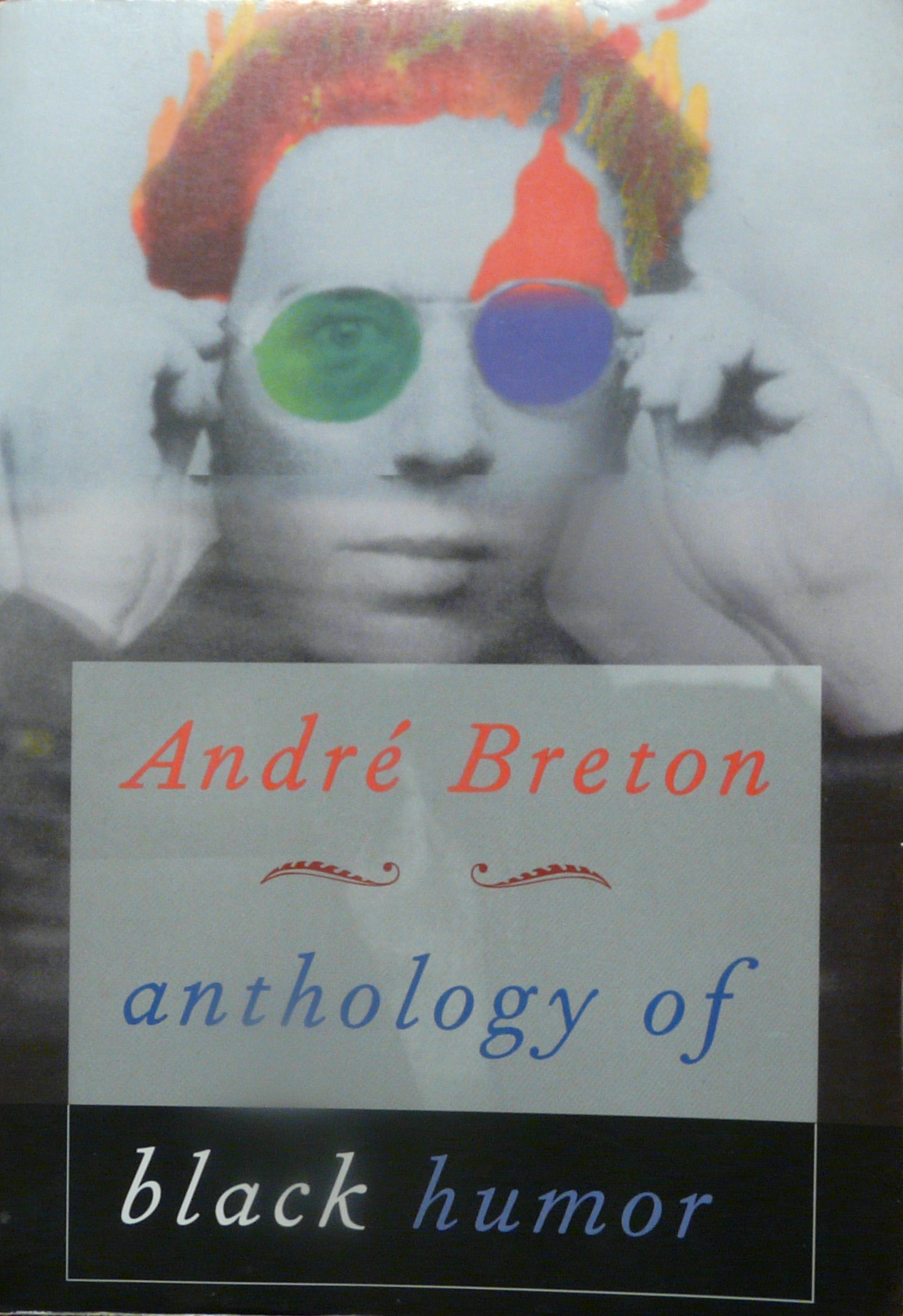
Anthology of Black Humor

edited by Andre Breton

Surrealism was an art movement founded between the two world wars by its figurehead Andre Breton. The theory behind it was that Western rationality had built up modern society by suppressing humanity’s emotions, dreams, passions, and desires. In Freudian terms, this meant the id was imprisoned in the unconscious by the superego, or the collective society, that demanded obedience from the individual’s ego. The result was not only the misery of industrialization with its ugly factories and pollution, the repression of individual happiness, and a disconnection from nature, but also the insanity of two world wars. Hyper-rationality was killing the human spirit. So the Surrealists set out to set the unconscious free from its prison by embracing irrationality. Their art utilized intuition and chance to explore dream imagery, altered stated of consciousness, occult practice like automatic writing and fortune telling, and so-called primitive art from Africa, the Americas, and the South Pacific. In the end, they became one of the most ambitious, intriguing, and influential of the 20th century’s avant-garde art movements.

However, Andre Breton himself turned out to be a bit of a tyrant. Sooner or later, ever member of the Surrealist group got shown the exit by Breton for not being sufficiently Surrealist in the ways he wanted them to be. For a guy who claimed to embrace the intuitive and the irrational, you can’t say this was out of character. But another side of his bellicosity may have been the result of some of the other Surrealists finding more fame and commercial success than Breton. Ultimately, the Surrealists did make some incredible art, at least when taking the visual arts and film into account. Surrealist literature never reached the heights that other Surrealist mediums did. In any case, Breton put together his Anthology of Black Humor to showcase literary passages that capture and exemplify the spirit of Surrealism. As you may predict, it isn’t as engaging as the rest of the Surrealist project.

The book starts off with a good explanatory essay by Andre Breton. The purpose of black humor, in the sense of Surrealism, is to revolt against the repressive nature of society. He writes about humor that is cruel, violent, subversive, and allowed to run free with laughter being an outpouring of emotion that strikes a blow against the crushing weight of society’s superego. It is a volcanic outburst that liberates the individual from restraint, allowing an eruption of psychic energy and vitality that liberates each person so that their desires and creativity can flow freely. This humor has to be violent because its purpose is to break down all resistance to human freedom. One of Breton’s famous quotes is “beauty will be convulsive or it will be nothing at all.” What could be more convulsive than a burst of laughter at a sick and offensive joke, an explosive laughter so titanic in strength that it causes a disruption in the dreary orderliness of society? Humor has to be cruel and dark enough to be so disruptive. That is a tall demand to live up to.

Alas, most of the passages in this book do not reach those heights. At its best, this collection has some familiar names that go far in reaching the intention. It contains excerpts from Jonathan Swift’s “A Modest Proposal”, Sade’s Juliette, and Lewis Carroll’s “The Lobster Quadrille.” There are a few other lesser known works by famous authors like Charles Baudelaire’s story about deliberately ruining the day of a street vendor selling glassware, the drunken Edgar Allan Poe having a conversation with a hallucinated man made out of wine bottles, J.K. Huysmans explains the need to harvest ptomaine from corpses to be used for perfume bases and flavorings for food to be eaten by the deceased’s family, and finally Leonora Carrington convinces a hyena at the zoo to attend a ball disguised as her and eat all the food because she prefers to stay home. These morbid passages are the funniest, the most disturbing, and the most most memorable ones in the anthology.

There are other recognizable names included like Friedrich Nietzsche, Franz Kafka, Salvador Dali, Arthur Rimbaud, and Comte de Lautreamont. Aside from the name recognition, these chapters don’t do much to keep the book interesting. Breton has a funny way of selecting some obscure writings by these authors that don’t come across as hilarious or even lend much to the book overall. There is also some poetry and a few passages by unrecognizable authors as well. It’s probable that the French sense of humor does not translate well into English and Surrealist humor, which is intended to be irrational, makes it all that much more opaque and incomprehensible.

Anthology of Black Humor is, overall, an underwhelming collection of writing. There are very few laugh-out-loud moments and even the funniest parts aren’t the kind of humor that will make you laugh until you break out in tears. Also, too many of the chapters are simply beyond comprehension; a lot of them read like smug inside jokes that most of us will never be privileged enough to understand. This collection fails to reach the earth shattering intentions that Andre Breton lays out in the introduction. Yet again, this is one of those books that I love the idea of, but don’t feel satisfied with its realization. And if you really are still wondering what black humor is all about, just remember the cannibal who bit into the arm of a clown. With a look of disgust on his face, the cannibal said, “This tastes funny” and spit the clown meat out.


Friday, July 15, 2022

Vintage Paperbacks with Psychedelic Covers


The Counterfeiters 

by Andre Gide

Vintage Books/Random House reprint, 1973

mass market paperback

The Counterfeiters, published in 1926 when Gide was fifty-seven, shocked many by its honest treatment of homosexuality and the collapse of morality in middle-class France. Its three themes - the problem of morals, the problem of the literary artist, and the problem of society - are strikingly illuminated as the protagonist, a young artist, pursues a search for knowledge in the relationships of his own adolescent relatives. 

Included in this edition is Gide's journal of The Counterfeiters, the day book he kept during the writing of the book, which provides a unique view into the mind of a great novelist at work.

(copied from the back cover)


Book Review & Analysis: Baby by Robert Lieberman

Baby by Robert Lieberman       Can good intentions lead to harmful choices? Can bad intentions result in good things happening? When faced w...