Sunday, June 2, 2024

Book Review: Please Kill Me


Please Kill Me:

The Uncensored Oral History of Punk

by Legs McNeil and Gillian McCain

According to Ed Sanders, lead singer of The Fugs and author of books on the Manson Family murders, a counter-current existed in the hippy subculture of the 1960s. While most hippies were middle or upper class kids who could afford the luxury of turning on, tuning, and dropping out due to the financial security they could return to if they left the scene, there was another growing faction of hippies that came from a blue collar background. Some of these people suffered from abusive parenting or strict religious upbringings. This underbelly of the hippy underclass were more negative and nihilistic in their outlook, being hard drinkers and hard drug users, prone to carrying switchblades or chains, and not afraid to use them. Some of these people drifted into motorcycle clubs like the Hells Angels or other biker gangs of the counter-culture while some began morphing into a hard-edged scene of their own. Those latter people were the seeds of what came to be known as Punks. Please Kill Me by Legs McNeil and Gillian McCain is an oral history of the proto-punk and first wave of the punk music scene, mostly centered in New York City’s Lower East Side, gradually spreading across America and eventually into Europe.

In the early 1970s, Legs McNeil and some friends saw a cultural trend emerging in the downtown music scene of Manhattan. It was a reclamation of primal rock and roll, a return to three minute songs, fast paced with high energy and high volume, confrontational lyrics, animalistic wildness, and a tough, streetwise attitude that could only have emerged from the scumpits of New York in its most decadent and crime ridden decade. McNeil and company put together a magazine dedicated to this new trend and called it Punk. The magazine caught on, the name stuck, and the rest is history. Maybe it is a history that some cultural critics wish we could forget, but staying true to its defiant nature, it, hasn’t been forgotten and probably won’t be as for a long time, just like the atomic bombings of Hiroshima and Nagasaki won’t be forgotten either. This book chronicles those origins and early days of the scene, piecemeal in a collage of quotes from articles and interviews involving people who were clear-headed enough to be able to speak about what they saw.

Obviously the story doesn’t start in 1975 with the first publication of Punk which had a drawing of Lou Reed on its cover. It starts in the 1960s with The Velvet Underground and Andy Warhol’s Factory. Amphetamines were the drug of choice in the Factory and the scene started to attract rough trade, the types of people who didn’t, or didn’t want to, fit in with the hippies. Andy Warhol became the manager for The Velvet Underground and they became the band that inspired thousands of others to become musicians despite their unpopularity during their short career.

Then came band manager Danny Fields, the man who signed The Doors to Elektra Records. He discovered MC5 and The Stooges, brought them to New York, and found himself on the wrong side of the record industry’s executives as those bands were a bit untame, too dangerous, unmarketable, and unable to make millions of dollars for the investors. But The Stooges’ front man Iggy Pop caught the attention of David Bowie and his band found a lifeline in the music industry. Meanwhile, while glam grew bigger in England, its glitter rock counterpart in New York took off with the New York Dolls, a band that performed in drag even though they weren’t gay. They weren’t just ordinary transvestites; they looked like the kind of street walkers that would haul you down an alley and stomp your head in with their platform shoes, not even bothering to steal your wallet. Their brand of rock picked up where Chuck Berry left off with Johnny Thunders playing guitar in a way that made you feel like you were standing under a jet airplane as it flew ten feet over your head and a freight train went by five feet off to your side.. Lead singer David Johanson’s advice to young musicians was “don’t worry if you can play well or not. Don’t worry about how good your equipment is. Just get up on stage and play.” This embodies the approach to punk rock. It was never about technical perfection. It prioritized feeling and energy over talent and the feeling conveyed was gritty, violent, mean, dirty, and aggressive. And it was always exhilarating.

By the mid-1970s, the venues of Max’s Kansas City and CBGB’s had become the world’s epicenters of punk. Bands like Television, Richard Hell and The Voidoids, Ramones, Dead Boys, The Heartbreakers, The Dictators, and the Patti Smith Group were reaching national stardom. Then Malcolm McLaren arrived in New York and envisioned marketing punk rock in England. He brought some bands over to London and a scene around the Sex Pistols took off. When McLaren brought the Sex Pistols to tour in America, they became a media sensation, punk became a fad and a commodity, and when the Sex Pistols broke up along with most other American punk bands, the first wave of punk was more or less over.

In this narrative, the timeline of punk history is actually pushed into the background so that most of the discussions are about the people and events happening in the scene. Some of the people quoted or interviewed may not carry name recognition for people unfamiliar with the territory. There is an extensive glossary at the back for those who need it. Some of the major stars of punk don’t make any direct contributions to the narrative while their friends, girlfriends, groupies, managers, roadies, and various others do. The effect is like being at a party and hearing all these people reminiscing about those bad old/good old days.

And the kinds of things they talk about could be seriously disturbing to people who aren’t ready for it. The early New York punk scene would have been a goldmine for psychologists who study social dysfunction. The scene was loaded with violence, heroin addiction, alcoholism, promiscuity, prostitution, and all around bad behavior. Some passages might make you feel grimy or nauseous. MC5, the band that played at the Democratic National Convention riots in Chicago 1968, find themselves in a riot when they try to play at the Fillmore East. Iggy Pop gets beat up continuously, loaded on drugs, sometimes falling off the stage, throwing bottles, raw meat and peanut butter at the audience, and going so far as to slice himself up with broken glass. The Ramones find each other because they are a bunch of complete weirdos. Johnny Thunders becomes the most notorious junky in rock history. Wayne County bludgeons Handsome Dick Manitoba with a microphone stand after some misunderstood friendly banter, breaking the Dictators’ lead singer’s collar bone and putting him in a wheel chair. Johnny Blitz of the Dead Boys almost dies after a brutal stabbing. James Chance assaults members of the audience during a concert and then cuts his face with a broken bottle when the bouncers try to throw him out. Stiv Bators one-ups Alice Cooper’s stage show by hanging himself with a noose, no props involved, during a Dead Boys show at CBGB’s. Nancy Spungen gets killed allegedly by Sid Vicious who soon after dies of a heroin overdose. Some luminaries of the scene, namely Tom Verlaine, Patti Smith, and Lou Reed don’t appear in such a favorable light by the end of the book either. Punk rock was a musical genre started by and for fuck ups. Like the porn industry, it attracted a lot of unstable people. But we’re still feeling the effects of it now.

Having said that, there is a lot of gallows humor in these pages as well. The Stooges use a picture of Elvis Presley as a target when they feel like shooting holes in the walls of their house. Sid Vicious uses water from a toilet full of vomit to shoot up amphetamines. Iggy Pop gets arrested while wearing a dress and then tells the guy who picks up at jail that it isn’t a woman’s dress, it is a man’s dress while the police laugh at him. Cheetah Chrome gets arrested after throwing an air conditioner out of a hotel room window, hitting a police car, and the police tell him to put his pants on not realizing that his flesh colored leotards actually are pants. A studio engineer gives Johnny Thunders a shirt because he feels sorry for him, thinking his ripped t-shirt means he is too poor to afford nice clothes. Sid Vicious meets a friend on the street outside the Chelsea Hotel; the friend says he is going to pick up a vacuum cleaner at a friend’s apartment and Sid Vicious thinks “vacuum cleaner” is New York slang for a bag of heroin and insists he wants to get a vacuum cleaner too. And so it goes on.

This book only scratches the surface though. McNeil and McCain select the most outrageous stories and elements of early punk. There are a lot of bands that go unmentioned and the second wave of hardcore punk is never brought up, nor is the corporate commercialization of punk in the 1990s, the pretentious and dull grunge scene and crappy MTV punk. Parallel scenes like new wave, no wave, post punk, and underground metal get almost no space here either.

Please Kill Me is a great book and a must read for anyone who is curious about the roots of the most dangerous and influential musical movement in history. I have heard a lot of talk these days about transgressive literature and art, but punks in the beginning were living a transgressive lifestyle, one that put their lives in danger on a daily basis. It was reckless abandonment and rock and roll excess taken to its extreme limits. It shouldn’t be a surprise that most of these people died before the age of thirty, and yet Iggy Pop, the biggest stooge of all Stooges, is still alive and thriving. I guess whatever didn’t kill him really did make hims stronger. And I still think it’s odd that he became a professional golfer. All of the bands mentioned in this book provided the soundtrack to my high school years and reading about the people who made the early punk scene a reality is truly mind-blowing for me. I can’t praise this book enough.


Tuesday, May 28, 2024

Book Review


Where White Men Fear to Tread:

The Autobiography of Russell Means

with Marvin J. Wolf

As a white man, I took the title of this book to be a challenge. Where White Men Fear to Tread: The Autobiography of Russell Means is, after all, precisely calculated to draw attention to itself by needling a white person’s conscience. Beyond the title, it doesn’t take long after starting the book to feel as if I passed a simple test. It’s like Russell Means is saying “Here is a line. If you dare to cross it you will be confronted with your own ignorance. If you don’t cross it you are a coward, but if you do and you follow along with me as I tell my story to the end you will benefit immensely even though you will face some tough trials just like I did.” So by the last pages of this autobiography I felt like I had taken a few blows, That is to my benefit. Russell Means, possibly the ultimate American Indian warrior of our time, also leaves himself open to blows. He made a lot of mistakes in his life, but he was man enough to write them into these pages so he and others can evaluate them and learn from his life. Whether you are white or not, that line that Russell Means dares you to cross is well worth the risk.

Like all autobiographies, this one starts at the beginning of Means’ life. His parents grew up in the forced segregation of Indian boarding schools and he was of the first generation to grow up as an urban Indian, attending public schools. That generational shift is an important element in his story. Means was a highly intelligent boy who sometimes excelled academically and sometimes struggled to adjust. He never lost a taste for learning though, even until the end of his life. What he experienced might be typical for a lot of Indian children, meaning broken families, alcoholic parents, trouble fitting in, delinquency, and racism. By his teenage years, he was dealing drugs, drinking a lot, committing petty crimes, and turning into a drifter, moving from city to reservation and back again, mostly in search of work. From a young age, he honed his skills at fighting by getting into barroom brawls and his experiences with the Bureau of Indian Affairs were contentious and disappointing. Again, there is a lot for American Indian people to relate to here.

Russell Means’ political awakening came when he attended an Occupy Alcatraz Island demonstration in the 1960s. A band of native activists gathered on the prison island to declare it a sovereign state for indigenous people. Of course it amounted to no more than a little media publicity, but it sparked a fire, fueled by a high octane grade of testosterone, in Means’ heart that began to rage. Means later found himself in the company of the American Indian Movement (AIM), founding the Cleveland chapter of that activist organization where he took over the job of the BIA by doing the work they were set up to do but weren’t doing.

As AIM turned from being a community services oriented organizations to being a more militant revolutionary one, fighting for the sovereignty and independence of Indian people in America, Means entered the most turbulent period of his life. He organized a cross-country tour called the Trail of Broken Treaties, started the militant occupation of the Wounded Knee battlefield on the Pine Ridge reservation in South Dakota, participated in a courtroom riot, helped to destroy the Bureau of Indian Affairs office building in Washington, D.C., and got into a lot of trouble along the way. After several trials, he got exonerated from most of his charges with the help of a team of activist lawyers, though he did end up doing a three year stint in prison. You can criticize Means for embracing violence as his primary tactic and you could possibly say he did more good for his people when AIM was simply providing practical assistance to struggling Indians, but then again, all the violence did draw a lot of attention to the plight of American Indian people and all but started a renaissance in Indian cultural awareness during the 1970s. Besides, the violence goes a long way in illustrating all the pent-up fury that accumulated after so much genocide, broken treaties, stolen land, racial discrimination, and cultural destruction suffered at the hands of the white establishment. The violence is unfortunate, but when looked at in the wider historical context, it isn’t surprising. Part of what makes this book so great is the way Means always tells his story in reference to both history and the contemporary society in which he lived.

After the violent phase of his life, Means became a bit more creative in his approach to activism. He set up a commune to teach people how to live according to traditional Indian ways. He didn’t limit the community to Indians only and in fact allowed people of any race to participate as long as they were there in good faith and willing to contribute something of value to the community. Russel Means had no tolerance for white people who larp as Indians to trick themselves into thinking they are spiritual. He had no tolerance for anthropologists, sociologists, or gawking tourists either. This book makes the point that Indians have a living culture that is neither a museum piece nor entertainment for seekers of novelty.

Also of note is Means’ break with the American progressive Left. While being one of the prominent leaders of the fight for Indian civil rights, he had a contentious relationship with the activists of the post-1960s New Leftt who didn’t approve of his use of violence for political purposes. The big break up came in the 1980s when he visited the Miskito Indians on the est coast of Nicaragua, only to find that the socialist Sandinista party in power were committing genocide against them. After Sandinista militias tried to assassinate Means while conducting bombing campaign against Miskito villages, he returned to America and got shunned by Leftists who refused to believe the Sandinistas would do anything so terrible.

Russell Means turned to the radical American right from then on, making questionable alliances with Larry Flynt, the Unification Church, and the ever-so-flakey Libertarian party who asked him to run in the presidential primary against Ron Paul in 1984. Most Libertarians at that time actually hated Ron Paul and Means lost by only three votes. While Means could sound quite wise and philosophical when discussing the politics of racism and history, he comes off as naive and overly-simplistic when he explains his take on libertarianism. He isn’t any different from other libertarians in that way, but at least in his case it makes sense in the context of an Indian activist who wants freedom from the U.S. government for his people who are sitting on broken treaties that guaranteed them just that.

Unfortunately for everybody, it becomes clear that other Indians were incapable and not motivated enough to keep up with Mean’s never-ending energy and commitment to his cause. He was just one of those people with too much power, moving too fast through life for other people to keep up with.

By the end of the book, Russell Means is living in a treatment facility for people with anger management problems, a place he went to voluntarily. While acknowledging that his anger motivated him to do a lot to uplift his people, he was also courageous enough to admit that his rage also destroyed a lot of relationships in his personal life and led him to commit unnecessary acts of violence that did no one any good. After all he accomplished, he ends his story where he began: with an insatiable desire to learn and improve.

Means didn’t just live the life of a warrior; he also lived the life of an intellectual with a complex mind and a willingness to look at ideas from multiple perspectives. After reading this, it becomes clear that this autobiography is not just about Means telling his story to the world, but it is also a chance to reflect on his own life, searching for what he did right and what he did wrong with the intention of correcting the mistakes he made in the twilight years of his life. Means spent his life attacking American society while trying to rebuild the culture of Indian people and finished by looking in the mirror and confronting the most horrible things he did. Taking that kind of responsibility requires strength of character, a kind of strength that a lot of leaders in America and the world don’t have. I’m certain that Means would say this strength came from his people’s traditions and his connecation to nature.

As a book, there isn’t much here to criticize. Most of it is exciting with non-stop action, running along at a fast and smooth pace. Russell Means is such a polarizing figure though that there may be times when some readers will feel alienated from the story. His machismo might turn some weaklings off; he always did hate pacifists anyways. Otherwise, he says and does a lot of things that will be objectionable to just about anybody. But whether you agree with all of it, some of it, or none of it, he presents his ideas and life story in such a way that it never gets dull and never ceases to make you think.

And yet another great thing about this book is that it gives such a clear picture of what life for Indians, be they urban Indians or reservation Indians, are living through in our times. This is a perspective that will rarely be found in other books. It’s not about the “noble savages” you see depicted in Santa Fe tourist trap art, Walt Disney cartoons, or the junk new age shaman fantasies of Carlos Castaneda. It shows you realistically how real Indians live in the real world in the very real times we are in. This is where many people in our day will fear to tread, be they hippy Indian wannabes or conservatives and businessmen who turn a blind eye to the damage America and other countries have done to indigenous people.

So should white people fear to tread into the pages of this book? I should hope not as long as you are the kind of white person who cares about humanity and can take some constructive criticism without having an existential crisis. Russell Means can be intimidating; he is at times nasty, cruel, violent, impulsive, egotistical, condescending, and a bit of a publicity seeker, but he also has a caring side, a sly sense of humor, an ironic intellect, and an abundant love for his own people, the planet Earth, and, believe it or not, for humanity as a whole. Despite all his rage, he ends up where Malcolm X did after his pilgrimage to Mecca. No, white people and people of any other enthnicity or race, should overcome any fears they have and dive deeply into these pages. That’s what Russell Mean wants. Taking into consideration the things he says will only make you stronger, even if they do hurt. That is the approach of the warrior, even if it means merely being a literary warrior. Go ahead and read this book. I dare you. You’re a coward if you don’t.


Thursday, May 23, 2024

Book Review


Modern Art and the Object 

by Ellen H. Johnson

Modern art radicalized the way we see and create art. That is a truism by now. By extension, it also radicalized the way we interact with the objective world, or at least it did for people who pay attention to art. Ellen H. Johnson’s Modern Art and the Object is a survey and overview of the way in which modern artists treated objects in their works and as their works, sometimes even making themselves the works of art as well. While Johnson’s writing is descriptive and analytical, it doesn’t break any new ground in terms of art criticism or theory.

Her opening chapter is probably the most useful one in the whole book. As a survey, it traces the development in how objects are related to in art starting with Cezanne and his influence on Impressionism and Cubism which also opened up the doors to Dada and Surrealism. Cubists started the trend of incorporating found objects in their paintings while the latter two, Dada and Surrealism, brought the objects out of the canvases and made them into art objects standing alone as themselves. She then moves on to unexpected territories, examining the use of human actors as objects in performance art and even making the actual artist into a work of art in the case of Andy Warhol. Some of these themes get taken up in later essays while others, particularly the objectification of humans in performance art, never get any further mention. This first chapter at initially seems to be a great introduction to the subject, but unfortunately, it turns out to be the most provocative one in the whole book.

Johnson goes on to examine Cezanne and Picasso. Most specifically, she looks at the way in which both artists related to nature, the ultimate source of objective reality. She sees both artists as using similar techniques to release and draw out the inner essence of the material world. In the case of Cezanne, he shifted his perspective, moving his viewpoint several times while working on one canvas in an attempt to fully paint three-dimensional objects in a two-dimensional surface. Picasso, in his Analytc Cubist phase, operated by fracturing the surfaces of the objects he portrayed, making them incomplete and overlapping to further the sense of open space and depth in his paintings. Both techniques resulted in a visual outpouring of essences that had previously been trapped inside the surfaces of the objects. That is a great observation. The only problem is that if you have studied either artist or their theoretical writings then this nothing new. By the time Ellen Johnson wrote this book in the 1970s, this was common knowledge for anyone who had kept up with modern art. She merely states the obvious.

Those chapters on Cezanne and Picasso may not be original, but they are nicely written. Another nicely written chapter is the one on Jackson Pollock. Johnson explains how his works in Abstract Expressionism are deeply rooted in his relation to the natural world. Where Pollock differs from the two aforementioned artists is that his depiction of the “energies” of nature are shown without the objective surfaces that make them recognizable in everyday life. Cezanne and Picasso released these natural forces by fracturing surface appearances and drawing those energies out while Pollock entirely abandoned the surface appearances and painted the way in which he perceived those pure energies. . This is interesting, but again it is old information.

Another one of the better chapters is on Claes Oldenburg. In his attempt to re-integrate art into the praxis of everyday life, he created art objects representing everyday household items like typewriters, kitchen utensils, and cigarette butts. Only Oldenburg differs from those others because he neither destroys the outer surfaces of them nor does he abandon them in the Jackson Pollock way. What he does is soften those outward surfaces, making those ordinary things look cushy and pillow-like, as if the outward flow of their energy is neutralizing their outward forms, making them less rigid and more approachable. Yet again, this is not a unique observation.

The rest of the chapters are more or less just descriptive. There isn’t much explanation other than what the art objects, or the art depicting object, look like. Johnson continues on with the theme of how the artists related to nature and objectivity, but doesn’t come up with anything insightful or groundbreaking in any way that will enhance your understanding of modern art. Her writing can be awfully dull too and lacking in direction. The author spent her life as a prominent curator and gallery manager and that must have been her true calling in life because her work as an art critic doesn’t really go anywhere.

Modern Art and the Object is not essential reading. It appears to be Ellen Johnson’s attempt at leaving her mark on the world rather than offering some useful theories for the interpretation and understanding of modern art. The critic and Artforum editor Rosalind Krauss did a much better job of this in contrast. Johnson is preoccupied with the inner nature of objects, whereas Krauss wrote extensively about the surfaces of objects in modern art. Modernism was always about style more than substance and postmodern artists mostly sought to do away with substance entirely, making art about surface and nothing else. Rosalind Krauss demonstrates this successfully in her criticism. Ellen Johnson, on the other hand, leaves the reader feeling like she doesn’t have much to say. Perhaps that is because she is looking in the wrong places when she interprets modern art.


Sunday, May 5, 2024

Book Review


Love Canal:

A Toxic History from Colonial Times To the Present

by Richard S. Newman

In the late 1970s, there were two places in America that evoked a sense of dread anytime they were mentioned. One was Three Mile Island, the nuclear power plant outside Lancaster, Pennsylvania that leaked radiation into the atmosphere and could potentially have caused a meltdown. The other was Love Canal, a toxic waste dump in Niagara Falls, New York where an entire neighborhood had been built. Richard S. Newman’s Love Canal tells the story of the latter, covering the business practices of the man who gave the site its name, the chemical company that dumped their waste there, and the grassroots protest movement that grew around the discovery of the deadly deposits under the soil.

Newman begins his account with the American Indians’ reverence for the famous Niagara Falls and the coming of colonialists who saw the potential for using Lake Ontario and the Niagara River for the transport of commercial goods. Later, when the Industrial Revolution kicked in and the falls became important for generating electricity, Niagara Falls became a boom town for manufacturers. Out of this economically expanding community came a man named William T. Love. He had a vision of building a canal running off the Niagara River that could be used for generating power in order to expand the growth of the small city southwards where more factories could be built. Love’s enthusiasm was infectious enough to raise investments and his employees went to work building the canal which they named after him, dubbing it the Love Canal. But William Love was more of a dreamer than a doer; he ran out of funds and he abandoned the canal project after its being only partially built.

Years later, Elon Hooker founded the Hooker Chemical company. It was a successful company, especially in the World War II era when they began manufacturing chemicals to be used in various ways for military equipment. Hooker Chemical also took off because they produced important chemicals used in making plastic. Like any other industrial companies, they produced tons of waste. The city of Niagara Falls allocated the Love Canal as a dumping ground, so Hooker Chemical poured all their toxic sludge into flimsy metal barrels and dropped them into the ground, covering them with a topping made of clay.

A couple decades later, the city government allowed housing developers to build a low-income subdivision with a school and a housing project tower block for African-American renters all on top of the Love Canal toxic waste dump. The houses were cheap and a lot of blue collar workers thought they had bought into the American Dream. But then things started to go wrong. Rates of cancer and other diseases became disproportionately prevalent in the area, the rate of miscarriages skyrocketed, birth defects were common, and everybody in the neighborhood smelled a sickening stench in the air. Strange things were happening too like when children threw rocks they found, the rocks would explode and dogs that played in the grass would lose their hair. As it turned out, the barrels underground that were meant to contain the industrial waste had corroded and toxic chemicals were leaking into the soil and air, depositing in people’s basements, and getting into their drinking water. The locals got together and started a protest movement that got national attention. They added more fuel to the fire of the exploding environmentalist movement of the time. The author goes into all the fine details of what they did, how successful they were, the government’s reaction, and the long range impact of the political movement.

Throughout the telling of the Love Canal story, the author writes in a subtext, giving details about the ecological and environmental attitudes in America going back to the founding of the nation. Really that part of the history is taken up with the Transcendentalism of Henry David Thoreau and Ralph Waldo Emerson. After that there were various movements in favor of conservation and the preservation of nature. It wasn’t until the 1960s though that environmentalism intensified and a Return to Nature and Save the Planet ethic took over. People began seeing the natural world as not just a place to escape to for recreation or relaxation, but something we need to be part of in order to survive. All of this eventually merged with the activism of the Love Canal community and furthered the cause of environmental protection.

There is a lot to admire in this book. The chapters on the industrial and commercial history of Niagara Falls are fascinating, especially for those inclined towards an interest in modern history. The story of the Love Canal neighborhood and the activist movement that grew out of it are well-presented and sufficiently detailed too. The author also rightly make a point of explaining how toxic waste is a problem that can be effectively managed with technology when giving the proper funding and attention. The darker side of the story is the reminder that the Republican party and big corporations are working together to roll back all the progress that environmentalists have made, making future ecological disasters a probability. Sadly, people have short memories and living in a country where history is rarely ever taught, the future doesn’t look too bright.

Love Canal is a good book and especially the kind of thing the younger generations should be reading. Until recently, the environmental movement was growing and people of my generation were expecting to pass that torch onto the next generation. Unfortunately, when they picked uo the cell phone they dropped the torch and now pollution levels are rising exponentially, our water is filled with microplastics that kill wildlife and find their way into our food supply, more fossil fuels are burned then ever before, and global warming is accelerating rather than slowing down. Caring for the planet has become less important than staring at a screen all day watching reels of dogs on skateboards, people eating themselves to death in mukbang videos, and the latest, dumbest dance trends. People became so hypnotized by the internet that they forgot about everything that matters. Pay attention, kids...the next Love Canal disaster could be happening under your feet right now. If your phone is more important than the survival of the planet we depend on for life, then maybe we don’t even deserve to survive.


Friday, May 3, 2024

Book Review


Documentary Film

by Paul Rotha

with Sinclair Road & Richard Griffith

The first edition of Paul Rotha’s Documentary Film got published in the 1930s and has gone through several revisions since then. At first its readers may be shocked at how narrow the author’s range is, but the historical context needs to be kept in mind for anyone who even bothers to pick this one up.

Rotha starts with a simple and precise definition of documentary film. He contrasts it with what he calls “entertainment film”, meaning movies that tell a fictional story with no other purpose outside of entertainment. Documentaries, on the other hand, are meant to depict reality and intended to transmit information that may be necessary in order to inform the general population. Rotha points out that schools in Western culture do not properly educate the majority of the populace which means that most people do not know how to gather information or evaluate its merits on their own. Rotha was certainly right about that and I would say not much has changed over the last one hundred years. In any case, documentaries are necessary to inform the public and by this Roth clearly states that “inform” means persuading people to make the right choices. By “the right choices” he means whatever the government and the corporation say is right. This book is written from the perspective of a technocrat. His interest is in films that educate, instruct, or function as propaganda.

Also of importance when contrasting fiction with non-fiction films is the setting and the people who star in the production. Entertainment films are an extension of the theater and utilize created stage sets and professional actors, whereas documentaries use already existing settings and ordinary people who do not act but speak naturally as they would when off-camera.

Obviously, the two sides of this dichotomy do not hold up. Fictional and entertainment films can be used for educational purposes. Spike Lee’s Do the Right Thing, Steven Spielberg’s Schindler’s List, or the 1982 film Ghandi could be used as examples of non-documentaries that teach, or even Alfred Hitchcock’s Spellbound which was produced to explain the concepts of Freudian psychoanalysis. Then there is the absolutely amazing film Black Orpheus directed by Marcel Camus in 1959 using non-actors and the already -existing favelas of Rio de Janeiro as settings to tell an entirely fictional story based on Greek mythology. It may be unfair to cite these as examples that disprove Rotha’s framework because they were all made after he wrote this book and you would be correct in your objection. But I do want to point out the limited range of the author’s argument. That limited range is also not his fault as he could not see the future and had no idea where the art of film would eventually go. That is just the limitations of our consciousness.

Then again, it is also important to understand that Rotha is uncritical in his analysis of documentary film. He never addresses the ethical issue of who is to decide what is right or wrong for documentary film making. There are documentaries that give misleading or false information, sometimes deliberately so. This is especially true in the era of the internet. He does briefly address the problem briefly in his analysis of the Nazi propaganda films made by Leni Riefenstahl, but he doesn’t take the issue beyond that point. He never looks inward at his own country, England, to examine whther or not the government there is entirely truthful in their presentation of propaganda or the news reels that were shown in cinemas during that time. Then there is also the question of what is real. A documentary about religion might be considered either fiction or non-fiction depending on who you ask. Finally there are also documentaries like Jonestown: Paradise Lost where actors and studio sets are used to recreate the story of the Peoples Temple in Guyana documentaty-style. Dismantling Rotha’s framework shouldn’t mean anything against the man who wrote this book; he obviously wasn’t stupid and his shortsightedness is simply a typical human trait. If anything, it should serve to remind us that future generations will look at us with shock and dismay, wondering how we could have been so ignorant. Keep that thought in mind when you pass judgment on the generations that came before you.

Rotha proceeds to analyze the elements and techniques used in the production of documentary films. He explains the roles of producer and director, the use of sound, the process of editing, the method of camera work, and so on and so forth. The discussion gets slightly technical and may be a little boring for those not inclined to care about these matters. I did find the passage about how sound is used to influence an audience’s mood to be interesting, especially because he is writing about non-musical, atmospheric and environemtnal sound. Also the chapter on how the physical movement of objects can be used to arouse an emotional reaction in the audience was provocative too. Most of what is written in this section could just as easily apply to non-documentary films though as it could to documentaries so I wouldn’t say it fulfilled its real purpose.

Rotha relies heavily on Robert J. Flaherty’s Nanook Of the North and Battleship Potemkin to illustrate his points. Those are the kinds of films that film historians discuss passionately while ordinary people tend to dismiss them as horribly boring; you might want to consider that serious film geeks may be on the spectrum when they make the mistake of thinking they are on the level. Normies don’t really appreciate Citizen Kane much either. I mean A Touch of Evil was a far better Orson Welles film anyways. Nanook Of the North and Battleship Potemkin also further illustrate what I previously said because many critics do not actually consider them to be documentaries for reasons I won’t go into here.

The rest of the book is filled with essays by Sinclair Road and Richard Griffith. They list and briefly describe documentary film production internationally. Judging from the time in which this book came out, it should be no surprise that the concentration is heavily in favor of Western Europe, the United States, and Canada. The Global South gets some mention, but not much. The chapters on Latin America and Africa get about one and a half pages each respectively. These chapters merely list the titles of documentaries that are no longer on anybody’s radars with some brief commentary. They really aren’t worth reading.

Documentary Film is not a book that will appeal to most people in our times. It was written when the art of film production was just past its infancy and the scope is narrow as a result. The art of cinema has expanded in an infinite number of directions since Paul Rotha wrote this book. Reading this makes me think that future generations, supposing the human race survives global warming and environmental destruction, will look back on the internet in the 200s the way we now look back at silent movies and think similar thoughts. This book might be of historical value because it was a foundational text in film theory and provides us with a reference point regarding how far we have come in almost one hundred years. Other than that, it isn’t a terribly interesting or useful book to read.


Monday, April 29, 2024

Book Review


Son of Sam

by Lawrence D. Klausner

By the end of the 1970s, New York was the most dangerous city in America, if not the whole world. Adding to the climate of fear, violence and crime was a lone serial killer striking out at random times and random places. Police knew every time he struck because the bullets recovered from the scenes all came from the same gun a .44 caliber pistol that was a rare make and model with a powerful kick that could most likely only be handled by an experienced shooter. That man was later revealed to be David Berkozwitz. Lawrence B. Klausner, in Son of Sam, tells the story primarily from the police force’s point of view.

Roughly half the book is dedicated to telling the story of NYPD’s detective task force put together specifically to catch the elusive murderer. Klausner does this for good reason. His intention is to celebrate the heroic manhunt conducted by that crack team of investigators, called Operation Omega, without overly emphasizing the sick details of Berkowitz’s long term killing spree. But this approach only goes so far. A lot of Operation Omega’s work leads to dead ends and faulty conclusions that result in nothing but frustration. Actually it is the Yonkers police who do the most to put the pieces of the puzzle together when they begin noticing the strange behavior of Berkowitz who lives in a Yonker’s apartment building up until his capture. This may be an accurate way to portray police detective work, but you have to consider that most people don’t read this book for information on law enforcement procedures.

Klausner also makes a slight and similar lapse of judgment in his handling of the murder victims and their family’s reactions. He mostly handles this sensitive part of the story well and in good taste. It is obvious where his sympathies lie and he shows us how violent crime does not only effect the people who get shot, but also their families and the surrounding communities too. But Klausner goes a little too far with this. After the shooting of Berkowitz’s last victims, Stacy Moskowitz and Robert Violante who were out on their first date, the author tracks their families into the hospitals where they are taken. The problem is that this part of the book is overwrought and maudlin, descending into melodrama that over-sensationalizes and over-sentimentalizes the situation to the point where the author subverts his own intentions by trying too hard to show us the distress of the families. He wants us to see the gravity of the crimes, but turns it into a soap opera instead. We can forgive Klausner for this error simply because we know his good intentions, though.

And finally there is the story of David Berkowitz, the .44 Caliber Killer and the Son of Sam himself. Berkowitz is an adopted child who had trouble making and maintaining friendships during his childhood. Shy and awkward, he always fails to fit in even though people think he seems like a good guy, at least on the surface. He makes it through the military, becoming an expert sharpshooter, then returns to New York City, living alone and holding down various jobs. At some point in his life he begins hearing howling dogs that he believes to be the voices of demons telling him to kill so they can drink the victims’ blood. Only Berkowitz’s attempts at murder make the auditory hallucinations stop. And these hallucinations do stop anytime he goes to work. On the days he has off, the howling dogs start to harass him. Unable to sleep, he tucks his gun into his pants and goes out to kill in the outer boroughs of Queens, the Bronx, and Brooklyn.

Berkowitz writes letter to the police, some of which end up in the newspapers. With prose that sounds like something out of Dostoevsky’s Notes from Underground, he gives details of his crimes and explains his situation. He believes his neighbor in Yonkers, a man named Sam Carr who owns a dog that barks at night, is actually Satan and Berkowitz believes that Sam is commanding him to kill in order to prevent bigger disasters like earthquakes or tornadoes from happening, hence the self-given name of Son of Sam. The letters at first appear to be taunting the police, but in a sense they may be Berkowitz’s way of saying he wants to be caught. After they do arrest him, Berkowitz expresses relief because he doesn’t like the job of killing and feels he has no choice but to obey the voices in his head. It becomes clear early on in the book that David Berkowitz suffers from schizophrenia, but a schizophrenia that is difficult for outsiders to detect because his episodes only happen when he is tormented by loneliness. The degree of his disordered thinking is easy to spot early on when he thinks that his fist murder victim will marry him after she dies. His thoughts become more nonsensical from there.

Son of Sam is an interesting book, even if it is a little clumsy, uneven, and amateurish. The over-emphasis of the police department’s manhunt takes a little too much focus off of David Berkowitz to really make the story work entirely. But the biggest flaw is that a more in-depth psychological profile of the killer is never given. We get the details of his crimes and his mental illness, but the deeper psychology of how Berkowitz’s mind drives him to do what he does and how he came to be a killer when he didn’t want to be is never explored. His mental illness is the most colorful and interesting part of his biography and without a bigger examination of his mental processes, this book ends up being simply just a combination of police thriller and slasher horror story. Still the descriptions and atmospherics are well-done, and we do get enough of a taste of Berkowitz’s psychology to keep the story interesting.

Son of Sam is worth reading if you simply want the story of David Berkowitz’s crimes. In the end you may even feel an ounce of sympathy for the man who struggles with uncontrolled mental illness that drives him to commit crimes he doesn’t want to commit. Mind you, an ounce of sympathy is not a large amount and it is obvious that the victims deserves infinitely more sympathy than he does. Klausner does an adequate job of making this obvious fact clear enough.

Since he pleaded guilty and got sentenced to life imprisonment, Berkowitz has become a model prisoner and, every time he goes up for parole, he says he doesn’t deserve to be released because his crimes were so terrible. The story of his redemption is not covered in this book, but it is almost as provocative as the story of his serial killing spree. Is Son of Sam the American version of Raskolnikov from Crime and Punishment? That will be for future generations to decide. But there is no doubt, were Doestoevsky alive today, he would find David Berkowitz to be a fascinating character he could relate to.


Friday, April 19, 2024

Book Review


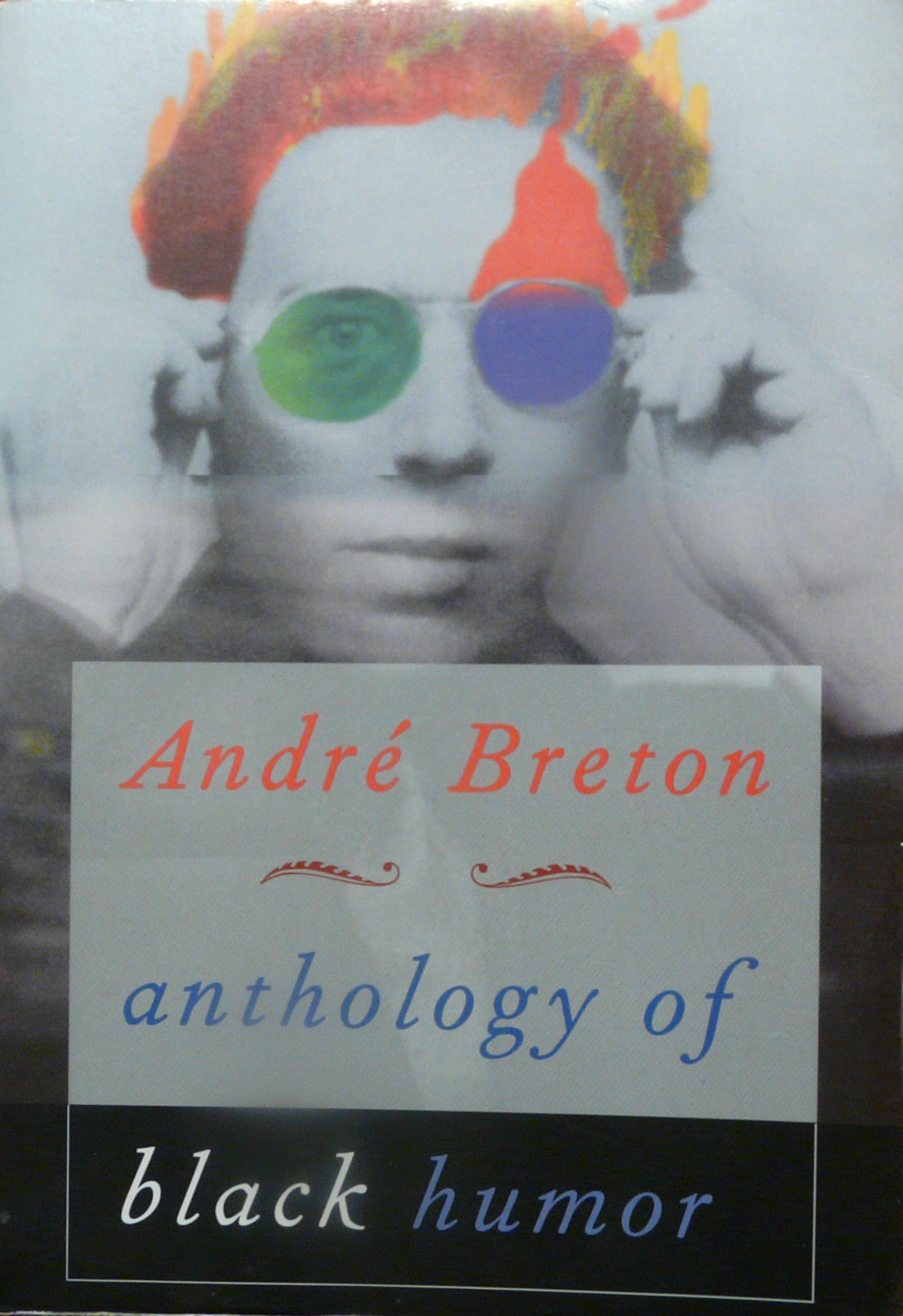
Anthology of Black Humor

edited by Andre Breton

Surrealism was an art movement founded between the two world wars by its figurehead Andre Breton. The theory behind it was that Western rationality had built up modern society by suppressing humanity’s emotions, dreams, passions, and desires. In Freudian terms, this meant the id was imprisoned in the unconscious by the superego, or the collective society, that demanded obedience from the individual’s ego. The result was not only the misery of industrialization with its ugly factories and pollution, the repression of individual happiness, and a disconnection from nature, but also the insanity of two world wars. Hyper-rationality was killing the human spirit. So the Surrealists set out to set the unconscious free from its prison by embracing irrationality. Their art utilized intuition and chance to explore dream imagery, altered stated of consciousness, occult practice like automatic writing and fortune telling, and so-called primitive art from Africa, the Americas, and the South Pacific. In the end, they became one of the most ambitious, intriguing, and influential of the 20th century’s avant-garde art movements.

However, Andre Breton himself turned out to be a bit of a tyrant. Sooner or later, ever member of the Surrealist group got shown the exit by Breton for not being sufficiently Surrealist in the ways he wanted them to be. For a guy who claimed to embrace the intuitive and the irrational, you can’t say this was out of character. But another side of his bellicosity may have been the result of some of the other Surrealists finding more fame and commercial success than Breton. Ultimately, the Surrealists did make some incredible art, at least when taking the visual arts and film into account. Surrealist literature never reached the heights that other Surrealist mediums did. In any case, Breton put together his Anthology of Black Humor to showcase literary passages that capture and exemplify the spirit of Surrealism. As you may predict, it isn’t as engaging as the rest of the Surrealist project.

The book starts off with a good explanatory essay by Andre Breton. The purpose of black humor, in the sense of Surrealism, is to revolt against the repressive nature of society. He writes about humor that is cruel, violent, subversive, and allowed to run free with laughter being an outpouring of emotion that strikes a blow against the crushing weight of society’s superego. It is a volcanic outburst that liberates the individual from restraint, allowing an eruption of psychic energy and vitality that liberates each person so that their desires and creativity can flow freely. This humor has to be violent because its purpose is to break down all resistance to human freedom. One of Breton’s famous quotes is “beauty will be convulsive or it will be nothing at all.” What could be more convulsive than a burst of laughter at a sick and offensive joke, an explosive laughter so titanic in strength that it causes a disruption in the dreary orderliness of society? Humor has to be cruel and dark enough to be so disruptive. That is a tall demand to live up to.

Alas, most of the passages in this book do not reach those heights. At its best, this collection has some familiar names that go far in reaching the intention. It contains excerpts from Jonathan Swift’s “A Modest Proposal”, Sade’s Juliette, and Lewis Carroll’s “The Lobster Quadrille.” There are a few other lesser known works by famous authors like Charles Baudelaire’s story about deliberately ruining the day of a street vendor selling glassware, the drunken Edgar Allan Poe having a conversation with a hallucinated man made out of wine bottles, J.K. Huysmans explains the need to harvest ptomaine from corpses to be used for perfume bases and flavorings for food to be eaten by the deceased’s family, and finally Leonora Carrington convinces a hyena at the zoo to attend a ball disguised as her and eat all the food because she prefers to stay home. These morbid passages are the funniest, the most disturbing, and the most most memorable ones in the anthology.

There are other recognizable names included like Friedrich Nietzsche, Franz Kafka, Salvador Dali, Arthur Rimbaud, and Comte de Lautreamont. Aside from the name recognition, these chapters don’t do much to keep the book interesting. Breton has a funny way of selecting some obscure writings by these authors that don’t come across as hilarious or even lend much to the book overall. There is also some poetry and a few passages by unrecognizable authors as well. It’s probable that the French sense of humor does not translate well into English and Surrealist humor, which is intended to be irrational, makes it all that much more opaque and incomprehensible.

Anthology of Black Humor is, overall, an underwhelming collection of writing. There are very few laugh-out-loud moments and even the funniest parts aren’t the kind of humor that will make you laugh until you break out in tears. Also, too many of the chapters are simply beyond comprehension; a lot of them read like smug inside jokes that most of us will never be privileged enough to understand. This collection fails to reach the earth shattering intentions that Andre Breton lays out in the introduction. Yet again, this is one of those books that I love the idea of, but don’t feel satisfied with its realization. And if you really are still wondering what black humor is all about, just remember the cannibal who bit into the arm of a clown. With a look of disgust on his face, the cannibal said, “This tastes funny” and spit the clown meat out.


Book Review: Voodoo in Haiti by Alfred Metraux

Voodoo in Haiti by Alfred Metraux       Most people know about Voodoo because of movies and television. It’s all Black people chanting in th...